
Learning Center
Practical Strategies for Family Style Dining in CACFP ($)

Family style dining is a meaningful way to support children’s development, promote healthy eating and create a sense of community at meal times.
Read MoreSnack-tacular Celebrations ($)
Take a fun and flavorful journey that will spark your creativity in developing easy, nutritious snacks. Celebrate every day with a new snack idea. Come hungry for ideas and leave with a snack resource to help you serve a variety of foods to those in your care.
Read MoreRacial Justice Resources from Sesame Street in Communities
All kids need a strong individual and group identity, but racism hurts the healthy development of both. Providers can begin building racial literacy in their little ones by engaging openly and honestly in these conversations. Join Sesame Street in Communities to explore resources that celebrate race, stand tall and address racism!
Read MoreDip into Summer Fun: Dips in the CACFP ($)

It’s time to dip into something delicious! Join us to mix up some summer-inspired dip recipes that are #CACFPCreditable and kid-approved.
Read MoreServing with Care: Food Safety 101 ($)
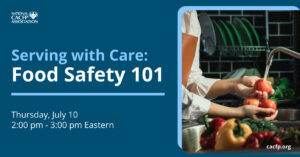
Gain the confidence to ensure a safe and healthy kitchen environment for the children or adults in your care. This training introduces the four key principles of food safety-Clean, Separate, Cook, and Chill—equipping you with the knowledge to prevent foodborne illness in our most vulnerable populations.
Read MoreAfterschool Meals Overview NCNC25 ($)

Get an overview of the requirements needed to provide healthy
meals at afterschool sites and to receive financial reimbursement.
Understand the basics of the CACFP and how afterschool programs
can play a crucial role in providing food security for children.
The Power of Pause: Regulate Yourself to Lead and Serve with Strength ($)
It takes just one minute to shift a situation. Learn the
importance of pausing to center yourself, manage emotions
and lead with clarity.
Preparing for CACFP or SFSP Audits ($)
The word ‘audit’ often evokes anxiety and unease for providers. It’s not a reflection of your confidence in your work but rather the apprehension of having it scrutinized by someone else.
Read MoreHunger, Health and How Early Care Settings Can Help ($)
While hunger and nutrition insecurity pose similarities, they also have distinct differences. Additionally, a lack of access to healthy food affects early childhood development.
Read MoreHelping Selective Eaters Succeed ($)
Have you ever wondered why some children refuse to eat the foods on your menu, no matter their variation or relevancy?
Read More