
670,504 children served healthy meals & snacks daily
It’s a bright morning in your home. The smell of oatmeal and cinnamon fills the kitchen as little feet shuffle in, ready to start their day. You pour milk, cut up fresh fruit and serve a warm breakfast at your kitchen table, the same place where stories are shared, friendships grow and learning begins.
You pour your heart into caring for these children every day. But serving healthy meals can be expensive and overwhelming, especially when you’re managing everything on your own.
That’s where the Child and Adult Care Food Program (CACFP) comes in.
The CACFP is federally funded, State-administered, and designed to support family child care homes in providing nutritious meals and snacks to children in their care. Participating in the CACFP strengthens your program and helps families by ensuring children receive balanced meals every day. Through the CACFP, family child care homes across the country can receive reimbursement for breakfasts, lunches/suppers and snacks served to eligible children. This program helps you stretch your resources, provide high-quality nutrition, and give children the nourishment they need to grow, learn and thrive.
Whether you run a small home-based program, a group family child care home or a multi-age child care setting, the CACFP for family child care homes can help you make every day count for the children you care for.
Why does the CACFP for Family Child Care Homes Matter?
Millions of children rely on the meals served in child care to meet their daily nutritional needs. For many families, family child care homes are a trusted environment where children receive care, supervision and healthy meals while parents work or attend school. Through the CACFP, family child care home providers can help ensure children get the nourishment they need to grow, learn and thrive.
Where is there room for growth?
With many children eligible but not reached, family child care homes have an opportunity to make a real difference. Serving meals through CACFP helps fill a critical gap, ensuring children have access to nutritious meals throughout the day.
What does research show?
- Children who experience food insecurity are more likely to struggle with behavior, stress and social interaction.
- Hunger is linked to difficulty focusing, lower test scores and chronic absenteeism.
- Programs offering nutritious meals show stronger engagement and better developmental outcomes.
Family child care homes play a unique role: they provide consistent, nurturing care while also serving meals that meet USDA standards. These homes offer a smaller, family-like environment where children can continue learning, building life skills and developing healthy eating habits.
What are the benefits of serving meals through the CACFP?
- Combat Food Insecurity: Ensure children in your care receive nutritious meals and snacks, supporting families who may struggle to provide consistent meals.
- Support Healthy Development: Meals follow CACFP meal pattern standards, promoting growth, learning and lifelong healthy habits.
- Increase Program Appeal: Offering nutritious meals can make your program more attractive to families, helping boost enrollment.
- Strengthen Program Support: Reimbursement helps offset food costs and allows providers to offer higher-quality, more nutritious meals.
- Support Working Families: Families rely on family child care homes for both quality care and healthy meals.
- Expand Community Impact: By serving CACFP meals, family child care homes contribute to the overall well-being of their communities and help ensure children have consistent access to nutrition.
Family Child Care Home Program Overview
Who can participate?
Family child care home providers must have current Federal, State or local licensing or approval to provide child care services.
What are the site eligibility requirements?
Family child care home programs that meet the requirements below are eligible to receive reimbursement for meals and snacks.
To participate in the CACFP as a family child care home, a program must:
- Be an organized nonresidential child care program for children enrolled in a private home, licensed or approved as a family or group day care home
- Works with a CACFP Sponsoring Organization
What organizations are eligible?
Organizations that sponsor child care homes must be:
- Public or private nonprofit institutions
- Approved by the CACFP State agency
- Responsible for training, monitoring and administering CACFP for the homes they sponsor
These sponsors:
- Submit claims for reimbursement
- Ensure compliance with CACFP regulations
- Support providers with resources and guidance
Examples of Eligible Sponsor Organizations:
- Public agencies (e.g., school districts, health departments)
- Private nonprofit organizations (e.g., community action agencies, food banks)
- Tribal organizations
- Faith-based groups
- Educational institutions
Is there require training?
Annual training is required for staff operating the CACFP. Training includes meal pattern information, record-keeping requirements and civil rights compliance.
Family Child Care Home Meal Service
All meals and snacks must meet the CACFP meal pattern requirements. The CACFP meal patterns are designed to meet the needs of children and are based on the recommendations of the Dietary Guidelines for Americans (DGAs).
There are five meal components in the CACFP: grains, vegetables, fruits, meats/meat alternates and fluid milk.
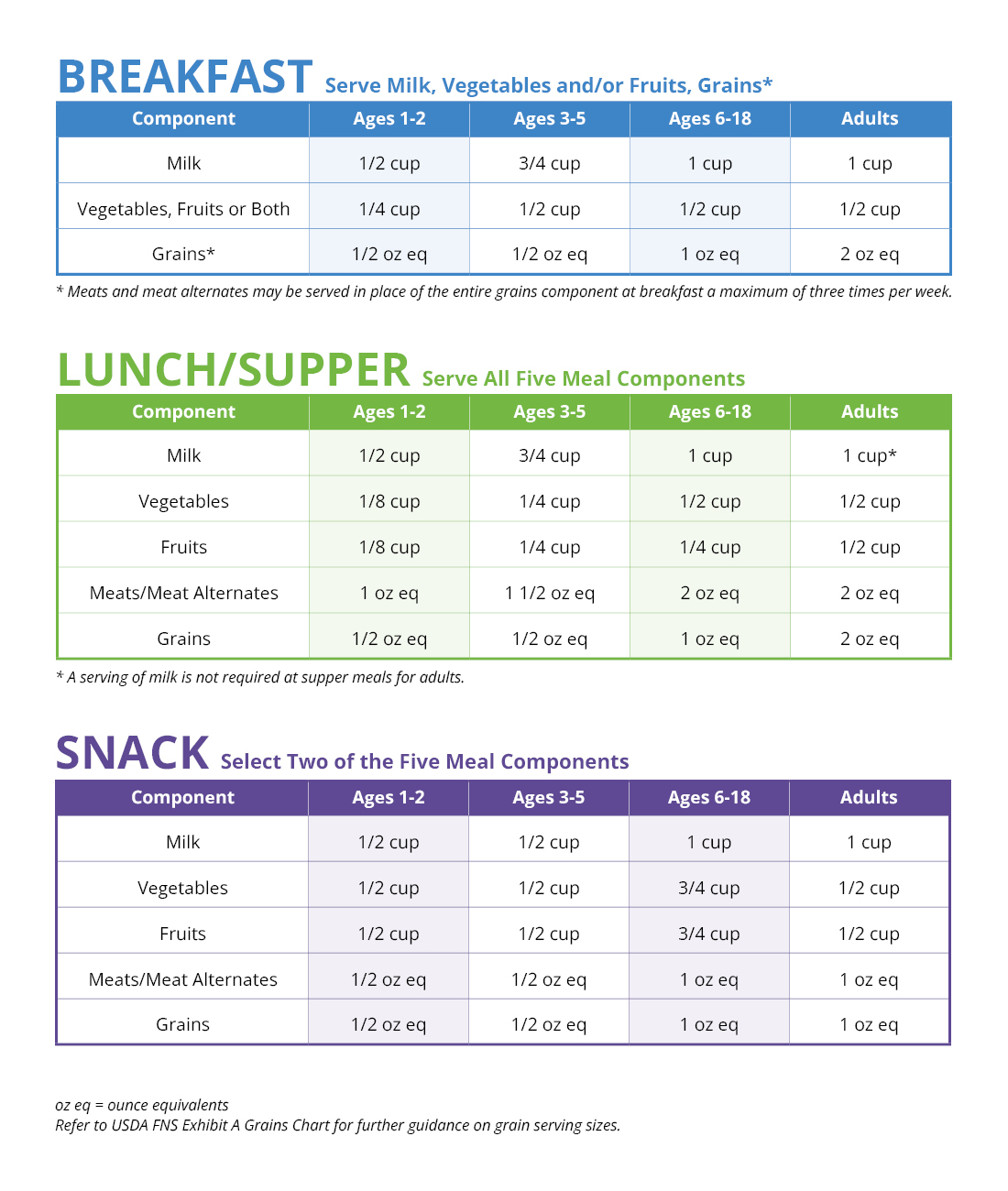
A creditable breakfast requires three meal components: fluid milk, fruits and/or vegetables, and grains. The entire grains component may be substituted with meats/meat alternates no more than three times per week.
A creditable lunch or supper will include all five of the meal components. There is an exception to this rule, which is that a second, different vegetable may be served in place of the fruits component. Also, when serving adults, the fluid milk component at supper is optional.
Creditable snacks consist of two different meal components. Though not required, it is a best practice to make one of the meal components of a snack either a fruit or a vegetable.
The meal pattern states the required minimum serving size for each meal component. You can serve more food if needed, but the reimbursement rate remains the same.
The meal pattern is component-based and supports proper nutrition by age group. It includes the following 5 meal components:

What are the grains requirements?
- Must be made with enriched or whole grain meal or flour, or bran or germ.
- At least one serving of grains per day must be whole grain-rich when grains are served.
- Breakfast cereals must adhere to CACFP sugar limits.
- Grains are measured in ounce equivalents (oz eq).
- Grain-based desserts are not creditable.
- A best practice is to provide at least two servings of whole grain-rich grains per day.
What are the vegetables requirements?
- Vegetables may be fresh, frozen, canned, dried (including beans, peas and lentils), or full strength (100%) vegetable juice.
- Full strength (100%) juice may count towards the entire fruits or vegetables component once per day.
- Beans, peas and lentils can credit toward the vegetables or meats/meat alternates component but not credit as both in the same meal or snack.
- A best practice is to provide at least one serving each of dark green vegetables; red and orange vegetables; beans, peas and lentils; starchy vegetables and other vegetables per week.

What are the fruits requirements?
- Fruits may be fresh, frozen, dried, canned (packed in water, fruit juice, or light syrup), and/or pasteurized, full-strength (100%) fruit juice.
- Full strength (100%) juice may count towards the entire fruits or vegetables component once per day.
- A best practice is to serve a variety of fruits and choose fresh, canned, frozen, or dried more often than juice.

What are the meats/meat alternates requirements?
- Commonly served meats include beef, chicken, fish, pork, turkey and surimi seafood.
- Commonly served meat alternates include beans, peas, lentils, cheese, whole eggs, nuts and seeds, nut and seed butters, tempeh, tofu and yogurt.
- Beans, peas and lentils can credit toward the vegetables or meats/meat alternates component but not credit as both in the same meal or snack.
- Yogurt must adhere to CACFP sugar limits.
- Meats/meat alternates are measured in ounce equivalents (oz eq).
- Best practices include serving only lean meats, nuts, beans, peas and lentils; limiting processed meats to one serving per week; and serving only natural, low-fat or reduced-fat cheeses.

What are the fluid milk requirements?
- One-year-olds must be served unflavored whole milk.
- Two-to-five-year-olds may be served whole, reduced-fat (2%), low-fat (1%) or fat-free (skim) unflavored milk.
- Participants six years and older may be served whole, reduced-fat (2%). low-fat (1%) or fat-free (skim) unflavored milk, or low-fat (1%) or fat-free (skim) flavored milk.
- Infants (birth to 11 months) may be served expressed breastmilk or iron-fortified infant formula, or may be breastfed onsite.
- Breastmilk is creditable at any age.
- A best practice is to serve only unflavored milk to all participants.
Download the meal pattern reference cards for free at cacfp.org/meal-patterns.
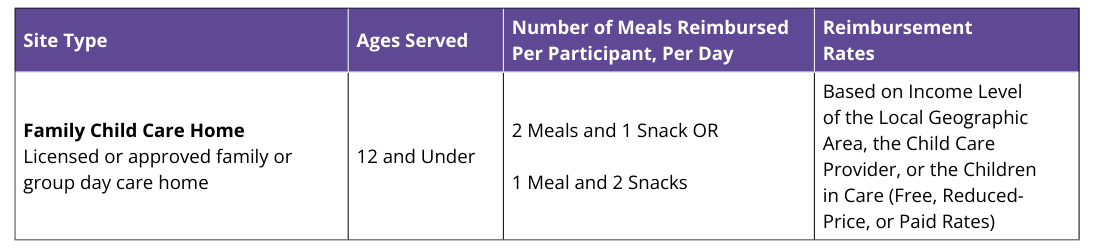
Family Child Care Homes can serve up to two meals and one snack or one meal and two snacks per participant per day.
Meals and/ or snacks must be served in a congregate setting. However, there are no federal requirements for how much time must pass between meal and snack services or how long each meal service must last. However, States may establish meal time requirements.
Family child care homes have two options for meal service. They can implement either one or both of these types of meal services throughout each day: pre-plated and family style meal service.
What are the recordkeeping and recording requirements?
The site must track attendance and record meal counts. Use daily forms or approved electronic systems to document the number of meals served and daily attendance.
Each month, claims must be submitted for reimbursement. If you are working with a sponsor, the sponsor will submit claims to the State agency on your behalf.
- Agreement / Application
- Current license or approval
- Menus
- Enrollment forms
- Income eligibility forms (if applicable)
- Daily Attendance
- Daily Meal Counts
Joining Made Easy
1. Find a Sponsor or Contact Your State Agency
A CACFP Sponsoring Organization (Sponsor) may help you claim reimbursement for the meals and snacks that you serve through the CACFP. They ensure that you are compliant with state and federal rules, and assist you in proper reporting and other administrative functions. Visit info.cacfp.org/sponsor to find a Sponsor in your state.
2. Determine Your Site Eligibility
Your Sponsor or State agency can help you figure out eligibility. The table below serves as a general guideline of what to expect based on the type of care facility you operate. Once your eligibility is determined, you can start receiving reimbursement based on the number of CACFP creditable meals and snacks served to those in your care. For the current reimbursement rates, visit cacfp.org/rates-of-reimbursement.

3. Receive CACFP Training
Your Sponsor or State agency will provide you with training. NCA also hosts multiple training webinars throughout the year, which you can find at info.cacfp.org/calendar or watch on demand at cacfp.org/learning-center.
4. Participate in the CACFP
Once you’re approved to operate the CACFP, it’s time to start serving nutritious meals and snacks! Here are some questions to ask yourself:
- Where will you source your food?
- What will your menu planning look like?
- How many meals and snacks will you serve?
- Look at who you are serving and your hours of operation to answer these questions.
Remember, you’re not in this alone! There are many valuable, free resources available at cacfp.org to help you ensure that the food you’re serving is reimbursable.
5. Become a CACFP Expert!
Stay up-to-date on meal pattern guidance and food program policy. In addition to speaking with your Sponsor or State agency, here are four things that you can do:
- Subscribe to NCA & USDA Newsletters
- Get Trainings in NCA’s Learning Center
- Become a CACFP Professional (CMP/CCNP)
- Meal Pattern Minutes
Make a Difference: Advocacy for Family Child Care Homes
The National CACFP Association advocates for policies that strengthen the CACFP for family child care homes.
What are the advocacy priotities?
- Simplifying, reducing and streamlining administrative requirements for sponsors and sites
- Streamline and improve the Serious Deficiency Process
- Streamline and simplify the meal pattern documentation paperwork
- Increase reimbursement rates to reflect rising food costs
- Increasing reimbursement by 10 cents for every meal and snack
- Eliminate tiering of family child care homes
- Provide reimbursement for an additional meal/snack for child care centers and family child care homes open for 8 hours or more
- Change the consumer price index currently used to determine reimbursement for family child care homes from ‘food at home’ to ‘food away from home’
- Allow family child care providers to claim their own children’s CACFP-provided meals for reimbursement without additional documentation
- Expand eligibility and access to the CACFP
- Reduce the area eligibility test percentage from 50% to 40%
- Increase the multiplier for the Community Eligibility Provision (CEP)
How can you help?
- Contacting your elected officials
- Submitting comments during public rulemaking
- Sharing your success stories with advocacy partners
- Visit the Advocacy Page
- Visit the Action Center
Angela Dobbs
Home Child Care Provider
Angela Dobbs always felt her calling was in child care. She enjoys teaching and watching the children learn on a daily basis, picking up even the simplest of skills that we as adults take for granted. She is a dedicated child care professional that wants everyone in her care to learn and grow.
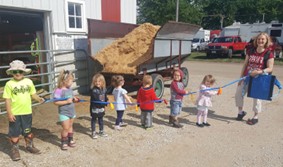
"The ultimate goal is to have everyone, even the babies, included in as many activities and experiences as we can while we shower them with love and attention.”
While the children are learning their foundations of letters, numbers and shapes, they also focus on nutritional experiences. Throughout the year, they tend the garden and harvest the produce. The children also help in the kitchen making recipes ranging from complex veggie meatballs to easier sandwiches on “make your own sub day.” Meals are served family style with everyone having their own small utensils and bowls to serve, while also practicing their manners passing plates and eating.
Angela goes above and beyond to expose the children to many different foods prepared in a variety of ways from kale to tofu. Although children may be hesitant to taste new foods, she finds success in simply renaming the food with a kid-approved name or introducing regular foods that are different because of color, like maybe a purple carrot. Everyone is included in taste tests and big cheers are given when someone takes a bite of something they are hesitant to try.
Angela takes on the new food guidelines as challenges she wants to master. She started trying different recipes to make whole grain bread, including whole grain pizza crusts and child-size sub rolls. Her goal is to have the children like the healthier, creditable food options.
From Cresca, Iowa, Angela has been a CACFP participant through Northeast Iowa Community Action since 2007.
Monica Jackson
Home Child Care Provider
When Monica Jackson befriended a nanny, she had no idea her career life was going to forever change. The nanny asked Monica to be her replacement and without looking back at her commercial loan lending career, Monica enrolled in the early childhood development program at Northern Virginia Community College. At the request of her professors, she went on to train other students in the program and continues to conduct workshops for providers and students, while also running her own home child care.
"If you are looking for a child to be successful, it is a process. Sometimes we dismiss the significance of the day-to-day instruction, but then you start to see all of the children’s accomplishments.”

Nutrition is taught through learning activities by incorporating many of the MyPlate resources, beginning with the Two Bite Club. Throughout the day, Monica acts as a role model for healthy habits and offers a variety of foods. The healthy habits that she instills in young children will serve as a foundation for life-long healthy choices.
Monica creates learning that is both intentional and experiential by making connections. With every lesson and activity, the children discuss what their goal is and what the primary lesson is. As they learn about and grow red beans and then spend the day at the farmer’s market where they see the beans, a connection is made. Monica’s goal is to equip each individual child with learning experiences and skills to be able to flourish when they move on to school.
Parents are a critical part of the learning process. A daily electronic photo album is sent home along with verbal reports, texting and newsletters. Monica knows that the parents have chosen her to take care of their children and she takes that responsibility seriously. Monica strives to find the "sweet spot" – that place where a connection is made with both the child and parent.
From Springfield, Virginia, Monica has been a CACFP participant through Fairfax County, Office for Children since 2004.