Taste and Touch
Suggested Age: 0-12 months
Offer your child objects that are safe to put in their mouth, like wooden spoons or plastic cups. Talk about what they’re doing as they put the objects in their mouth or move them. Even if they can’t yet speak, they’re supported by your voice and interest in their actions.
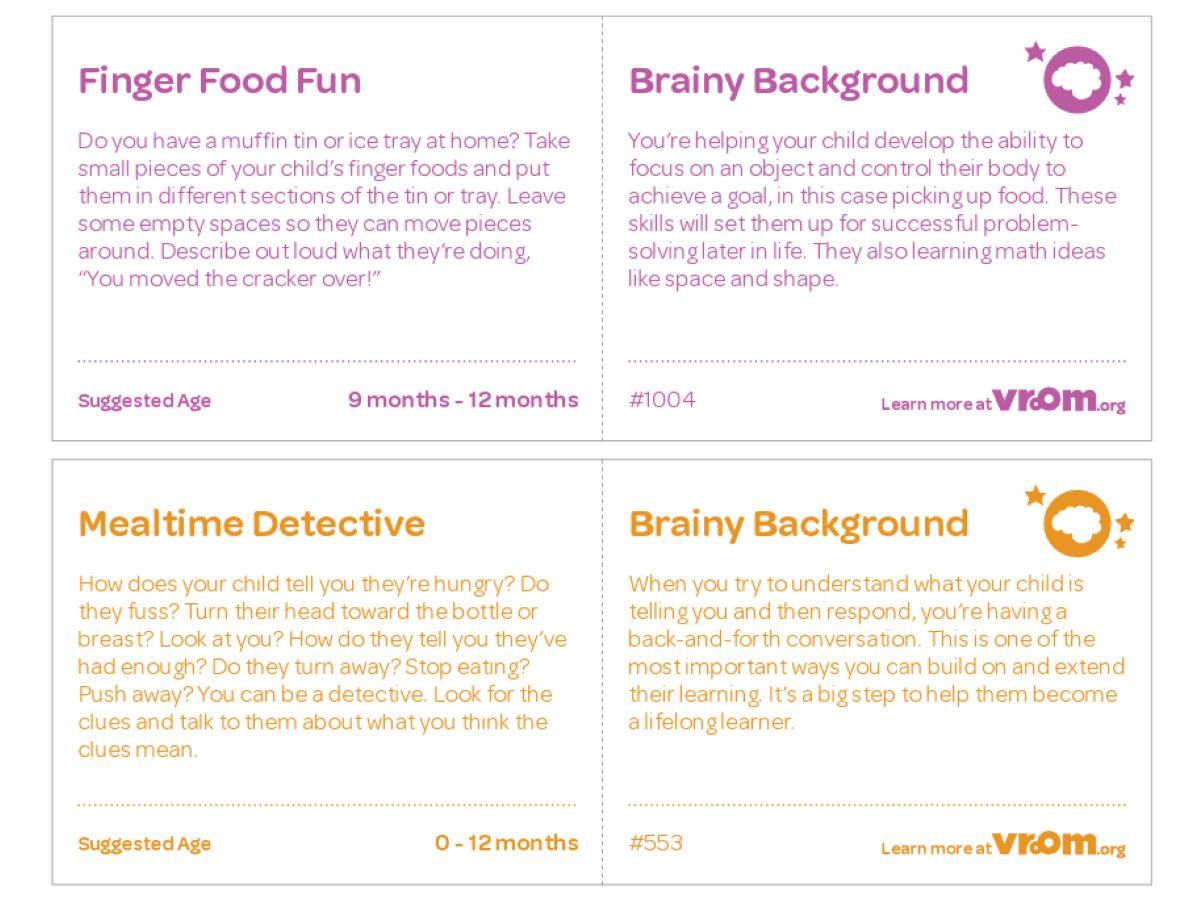
Finger Food Fun
Suggested Age: 9-12 months
Do you have a muffi n tin or ice tray at home? Take small pieces of your child’s fi nger foods and put them in different sections of the tin or tray. Leave some empty spaces so they can move pieces around. Describe out loud what they’re doing, “You moved the cracker over!”
Mealtime Detective
Suggested Age: 0-12 months
How does your child tell you they’re hungry? Do they fuss? Turn their head toward the bottle or breast? Look at you? How do they tell you they’ve had enough? Do they turn away? Stop eating? Push away? You can be a detective. Look for the clues and talk to them about what you think the clues mean.
Expressive Eater
Suggested Age: 6-18 months
Watch your child during mealtime. Are they reacting to how the food tastes and feels? Copy the faces they make and respond. Do they make a happy face when eating something sweet like fruit? You could ask, “Do you like that juicy apple?” Stretch the chat and ask another question or comment on their response
The Hand Wash
Suggested Age: 12-18 months
Let your child be your partner as you wash up before a meal. Say, “It’s time to wash our hands, yours and mine.” Put soap on both your hands and lather up. Be silly as you dry your hands off together. Do you shake dry? Toss the towel back and forth? Make a hand jumble? What else?
Mealtime Textures
Suggested Age: 12-18 months
What are all of the words you can use to describe the food your child is eating? Is the banana mushy, squishy, or slippery? Are the eggs warm, crumbly, and soft? Point as you say the words and watch them respond and reply back to them.
Play Kitchen
Suggested Age: 12 months-3 years
Work together with your child to create a play kitchen by offering them pots, spoons, and other safe kitchen items. Use the top of a table as a stove and ask them what they need to make food, like soup. Pretend to put in ingredients and take turns stirring and tasting your creation!
Homemade Play
Suggested Age: 12 months-3 years
What can you fi nd in your house to play pretend with your child? Offer them clothes, blankets, empty boxes, or clean and safe kitchen objects to use. Follow their lead and see where it takes you. If you need to, you can give them ideas like, “Should we build a boat or pretend to cook dinner?”
Animal Bites
Suggested Age: 18 months-3 years
Sometimes mealtime can be a challenge. Encourage your child to eat by offering them choices about how they eat. You can say something like, “Do you want two big dinosaur bites or four little bird bites?” Count the bites together and ask them to think of their own “Animal Bites” eating ideas.
Snack Senses
Suggested Age: 2-4 years
Take turns with your child coming up with words that describe what they’re eating. If they have a carrot ask, “What does it look like?” They might say, “orange,” and you might say, “pointy.” Keep the conversation going with questions like, “What does it feel, smell, and taste like?” or “What does it sound like when you eat it?”
Five Sense Sampler
Suggested Age: 12 months-5 years
Food can exercise your child’s fi ve senses! Let them taste a piece of the food and ask how it tastes, then have them smell it and tell you what they smell. Talk about the shape of it and how it feels to the touch. You can smell and taste it too.
Cooking Lessons
Suggested Age: 2-5 years
No matter what you’re cooking, your child can be a helper. Give them a play-by-play of what you’re using. If it’s safe, let them touch, smell, or taste things too. Chat about what you’re making: “Red pepper makes the beans spicy.”
Mini Chef
Suggested Age: 3-5 years
Have your child help with safe and simple tasks while you are cooking. Mixing or adding an ingredient can be good places to start. As you work, ask them what they think will happen when they stir things together or add something new. Listen to their ideas, then talk together about what you see happening.
Thoughtful Eating
Suggested Age: 2.5-5 years
Using self-control and focus while eating a favorite treat can be fun. First, ask your child to look at the snack and describe what they see. Then smell it, touch it, and finally take just a little taste. Talk with them about what they did to help them wait.
Mealtime Check-In
Suggested Age: 3-5 years
When eating together, invite your child to think about their day by asking, “What was the best part of your day?” Have each person at the table answer. Then ask, “What was the worst part of your day?” Go around the table again. Share your day with them and encourage them to ask others.
For even more tips for mealtime, check out Vroom’s Tip Sheet. It’s also available in Spanish!