
Fueling Young Minds
Institute of Child Nutrition (ICN)
January 13, 2026
Every day, you do more than care for children—you help them grow strong and healthy. One of the best ways to support this growth is by serving nutritious meals and snacks. Our partners at ICN explore how healthy eating supports brain development, learning, and lifelong habits.
Nutrition and Brain Development
The brain grows very fast during early childhood, especially from birth to age two. Children need foods with protein, healthy fats, carbohydrates, vitamins, and minerals — as well as water— to grow and to learn. Without these nutrients, children may learn or grow more slowly. Over time, nutrition can even influence how they act and perform in school.
Nutrients That Support Brain Growth
Specific nutrients—such as iron, zinc, choline, folic acid, omega-3 fatty acids, and vitamin B-12—are especially important for healthy brain development. You do not need to memorize every nutrient.
The easiest way to fuel brain growth is to serve a mix of foods from all food groups—milk, meat, poultry, fish, dairy, beans, nuts, seeds, whole grains, fruits, and vegetables. Together, these foods provide the nutrients children need to learn, grow, and succeed. Good nutrition helps the brain grow, but hunger can make learning harder.
Hunger Makes It Hard to Learn
When children are hungry, it is hard for them to focus or stay calm. They may act out or struggle with behavior. Meals from the Child and Adult Care Food Program (CACFP) help meet children’s nutritional needs. For some children, these meals may be the most nutritious, or only, meals they receive all day. Your role in providing balanced, nutritious meals truly supports learning and development.
Build Smarter Meals and Snacks
Small changes can help children get better nutrition. Try these ideas:
- Choose whole grains like brown rice, quinoa, whole wheat tortillas, or whole grain cereal.
- Add leafy greens like spinach and kale, or colorful veggies like broccoli, sweet potatoes, corn, and tomatoes to whole grain pasta or brown rice dishes.
- Sprinkle flax or chia seeds in oatmeal, smoothies, or yogurt. Add berries as a topping.
- Top salads with edamame, nuts, seeds*, and other vegetables like carrots, red cabbage, yellow peppers, and cucumbers.
- Bake or roast lean meat, chicken, and fish with herbs and spices for flavor, and try to include fish on the menu at least once a week. Check out the Culinary Institute of Child Nutrition’s Spice Blends poster for 12 different spice blend recipes.
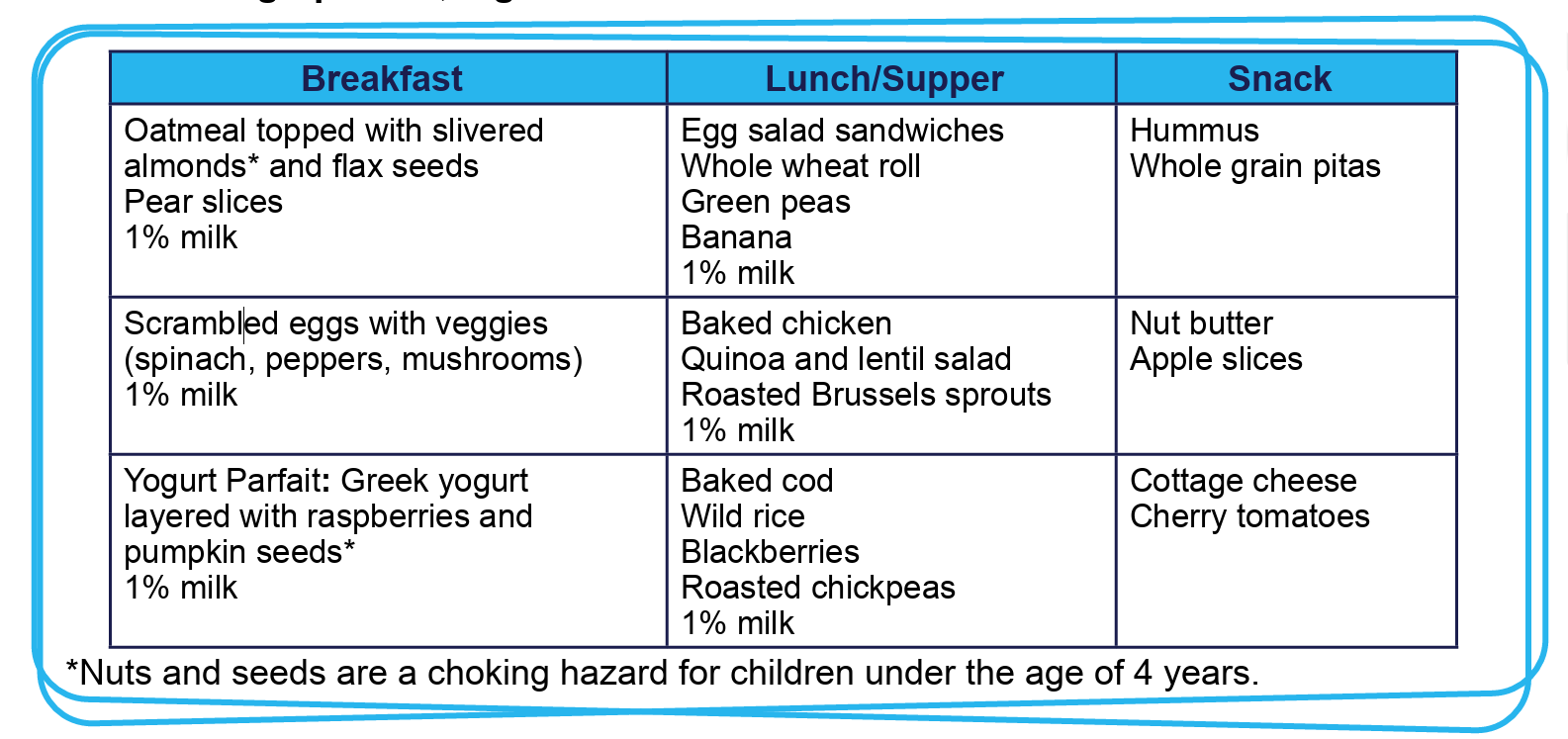
Serve high-protein, high-fiber meals and snacks. Here are some ideas:
Set the Stage for Lifelong Health
The habits children learn now can last a lifetime. By serving healthy meals and showing good eating habits, you help children stay healthy for life.
For even more information, check out ICN’s January Mealtime Memo.